Monday, July 20, 2009

Could EEStor Technology End North Korea's Evil Regime?

I'm not typically a political person. Most political dialogue in the USA is, to me, a little bit boring because I'm such a neophyte. But there are some issues that do get my blood boiling. Apart from my deep desire to see the USA achieve energy independence from our good friends in the Middle East, I get a bit out of sorts when I read about evil masked as legitimate government. Examples: Iran, North Korea, Sudan. I always come to the same conclusion: the absence of real LEADERSHIP is what allows such scenarios to grow into major problems. Unfortunately, individual citizens have limited options to encourage action on the part of our leaders and those around the world, ie, to complain....more or less.

In this regard, Blaine Harden from the Washington Post Foreign Service deserves some significant praise for his Front Page article on the topic of North Korea's Hard Labor Camps. Harden points out that these North Korean camps now exceed those of the Soviet Gulag & Nazi concentration camps. One of the camps covers an area the size of Los Angeles, CA. We know from former guards that the prisoners are mostly political and are tortured, malnourished and occasionally imprisoned with 3 generations of their family. Women are raped, executions are mini-terrorism lessons for teenagers and essentially, the whole thing amounts to mass scale sanctioned evil.

Sanctioned? That's a strange word to insert here because it means that something is done with approval. In fact, the recognition of North Korea as a sovereign nation is exactly that--a sanction to allow it's evil leaders to persist in power. And every free person whose free government allows North Korea to participate in any trade with any other nation is guilty by association (freely practiced in NK by the way) of this sanction. In my personal political belief system, at some point nations who conduct their affairs in such a way cease to be nations and warrant nothing less than WAR! Countries who treat their citizens shabbily are always the first to complain about such philosophies.

Of course, the key problem in North Korea is the South Koreans whose culture allows the conditions of the North to be largely ignored by its populace! In my opinion, we ought to express displeasure with South Korea for not taking care of it's problems with the North. Of course, they will claim that an attack on the North would imperil the millions of people in Seoul. So basically, you have a high stakes standoff with a thug regime. What's the answer? EEStor? Certainly nothing could be more ridiculous??!!?

What does EEStor have to do with North Korea? Everything and nothing. Let's start with nothing first. North Korean citizens are not perpetually tortured due to lack of basic energy storage. Check. An EESU does not represent a political philosophy more compelling to the Korean cultured mind. Check. Sure, North Korea could benefit from renewable energy sources with better storage like anyone but again, it could provide no change. Check.

But look at who props up North Korea: China. They have now replaced the Soviet Union, who used to keep Kim Jong Il in power back in the 1990s. Yes, of course, their other trading partners are from the middle east. And of course, various approaches to North Korea have been tried over the years. All have failed. So what's the EEStor answer?

Nothing would please me more than to have Dick Weir strictly impose a ban on the use of his products in China, the Middle East and the Soviet Union until North Korea is liberated and unified with South Korea. Set aside for the moment whether or not you can imagine that EEStor has exactly what it claims: how fantastic would be it be to see a hard headed Dick Weir beat his chest against world powers to effect real change??? I know, I know....it's completely crazy!!! ...but were it to be possible, can you imagine the drama? An interesting question to ask is whether or not EEStor is so disposed to do such politcal things? Well, reader, it is rumored that EEStor's incorporation rules prohibit the sale of EEStor to any Asian entity...specifically. So, if it's true, there may be some room for expansion of that sentiment. And relatedly, when Dick Weir was a pilot, where exactly was he flying around and why?

Of course, I can see the first major obstacle to the EESU becoming a political weapon: Zenn Motor Company. I don't think Zenn's shareholders would allow the company to block the use of EEStor technology in China.....unfortunately....even if Ian Clifford and team suddenly reflected deeply about the opportunity they may have to impact innocent and deserving lives. ( After all, if EEStor's technology is what they say it is....the corresponding creation of political power is a given.) I mean if you're going to fantasize about the reality of EEStor technology, you can't confine your thoughts to the stock price of Zenn. It's much bigger than that. And so, an interesting question to ask is whether or not Zenn Motor company and any other EEStor partner will take a stand with their goods? After all, why must global politics be played out only by governments? [Note: I am purposely not mentioning the Chinese Flag on the Kleiner Perkins website in this article. ]

I understand that the thrust of my article here may be a bit shocking and especially troubling if you follow EEStor for the prospect of Zenn stock or you think EEStor is a fraud. But the question is an interesting one: what if individual businesses with unique and important breakthrough innovations ceased doing business with China until North Korea was liberated? Picture a rag tag collection of innovative nuts (similar to moi) agreeing to do one thing: make it difficult for China & South Korea to allow North Korean human beings to suffer so much. (Or insert your favorite political cause here. )The prerequisite of course would be two things: truly transformational technology and the lack of public company regulation baggage.

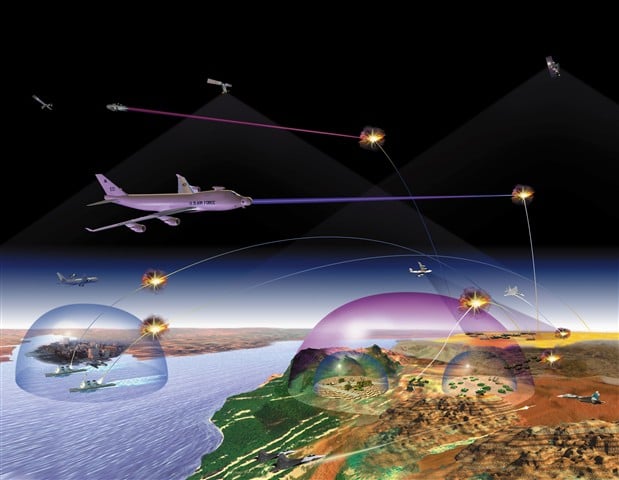
Finally, I should address the technical aspect of this topic briefly as a non-SME. What would be great would be a series of satellites, ships and aircraft with electric powered lasers containing North Korea's missile ambitions by downing them as soon as they leave their air space. Next, we could selectively point a few of those lasers at key government buildings in NK. Nothing too serious: just raise the ambient air temperature a few degrees....like a polite tap on the shoulder. Or how about carving the letters U S A into the courtyard in Pyongyang? Far fetched? Perhaps. Perhaps not.

This article is dedicated to Laura Ling and Euna Lee . “The freedom of the press is one of the great bulwarks of liberty, and can never be restrained but by a despotic government” -Thomas Jefferson

Tuesday, July 7, 2009

EEStor Says it Has 33 Employees....Corrected 33 = No

According to the Austin Chamber of Commerce, EEStor Inc. has reported that as of July 2009 it has 33 employees on staff as revealed in a recent Chamber document listing Clean Energy companies operating in the Austin area

 I asked Jose Beceiro, who is the Director of Clean Energy Initiatives for the Austin chamber, how the list was put together.  He told me the chamber purchased a business list from Hoovers and then had a team of people call area businesses to learn of the employment sizes.   So the figures in the list are self reported.  EEStor is not a member of the chamber, according to Beceiro.

Prior estimates of employees at EEStor have ranged from 8-15 in various counts.  This is the largest estimate so far and raises the question whether or not the facility on Discovery Blvd could even handle that many people. 

Thanks to TheEESTory.com member Jay for this discovery. 


CORRECTION:  EEStor points out this 33 figure is incorrect.  No additional clarification is available. 

Saturday, July 4, 2009

Fliers or Liars: What the Wrights can teach us about the Weirs and EEStor

Note: It is excellent to observe important traditions on a yearly basis. Unfortunately, traditions are also very difficult to launch with any confidence in their longevity. For this blog, my tradition--that I am launching now-- will be to update the essay you are about to read every year on the 4th of July. I will do this in honor of EEStor's achievements...and also because I'm anxious to publish what is at this time still a rough draft (thank you blog genre). The sources for the following essay consist of a tour of a well known museum in Washington DC and interviews with 5+ persons familiar with EEStor's history.


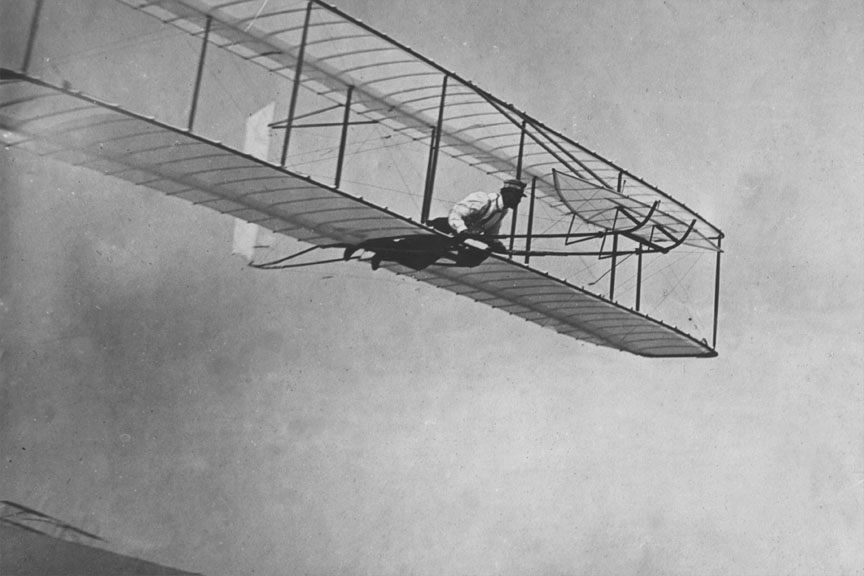
Towards the end of the 19th century, toys began to emerge whose amusement value was based on the fact that they could fly. For thousands of years, humans had marvelled at flight and at this point in time, in North America, small toys were knocking on the door of human consciousness. Strikingly so. Two children in particular were able to allow their imaginations to be captured by the possibility of flight – human flight.

-----

Almost 100 years later, two scientists were answering the call of their FREE nation to conceive of a satellite system whose existence would – like no other prior weapon, weapons program or system – provide protection to the free world; the foundation of human creativity and achievement. One of them was a successful Marine corps pilot familiar with the threats to freedom that perpetually gather up around the world. The shared determination of the pair in question was to use their intellectual gifts to preserve what they both considered sacred: freedom.

Like all successful projects of any complexity, this enterprise was broken up into sets of smaller problems such as that of creating a communication system which could enable multiple satellites to be aware, collectively, of the progress being made by inbound missiles. In the late 1980s, such a problem would require a great deal of data to be stored, processed and shared

among the team of satellites and those governing them from the ground. But even before sophisticated processing systems could be developed to tackle these problems, a seemingly mundane problem trumped them all: that of powering such a system to last long enough to be effective at the time it was needed. Unfortunately for this program, the solution to the energy storage problem would not emerge...leaving two men, Richard "Dick" Weir and Carl Nelson frustrated...but inspired.

--------------

The Wrights have flown or they have not flown. They possess a

machine or they do not possess one. They are in fact either fliers

or liars. It is difficult to fly. It is easy to say, "We have flown."

-New York

Feb 10, 1906

The names Orville and Wilbur Wright have a reputation that is untarnished, undisputed and beloved by all who reflect briefly on the existence of human flight ... much less, human activity in space. Quite an accomplishment for their particular human spirit which was originally inspired by nothing more than a childhood toy that the two continually destroyed through frequent play and rebuilt repeatedly via inspired ingenuity.

The Wright's status among the heroes of science was not always secure. In fact, it was vehemently debated to the extent that the tools of communication available 100 years ago enabled. The successes of the Wrights’ initial accomplishments were published in nothing more than a local beekeepers’ magazine (a blog of the day), having been rejected by Scientific American as being too far fetched. Despite this lack of mainstream media attention, accounts of their version of human flight did somehow make their way to Europe where they were contrasted with the ongoing failures there to move beyond simple gliding. The two bicycle manufacturers were ridiculed in print by the doubters.

“Fliers or Liars” read the headline from a 1906 article in the Paris edition of the New York Herald – in France the Wright brothers were widely dismissed as “les bluffeurs”. It is fair to say that human nature somehow always creates hysteria about people who claim to do something that has never been done before.

Some historians believe the Wrights relished the doubts, valuing the stealth it afforded them to discover and solve the key problems preventing human flight. While the rest of the world was focused on attacking flight with better and more powerful engines, the Wrights were innovating by creating the first wind tunnels to identify the most useful wing and craft designs. More importantly, unlike any of their peers, the Wrights were focused on enabling pilots to control flight – a problem whose resolution would not allow the others to be effectively tackled.

------------------

In the early 1990s, when the quest to fund a ballistic missile defense of the USA was losing political support, Weir and Nelson were taking stock of what remained of their defunct and failed project. Like geniuses whose accomplishments are rarely clouded by doubt, the two decided to one day discuss over breakfast the energy storage problem (and resolve it if their imaginations allowed it.) They chose a peculiarly American setting: a diner in San Jose, CA. Breakfast, lunch and dinner would be ordered in succession, and by the time the cleaning staff began its late-night work, shooing the two from their perch, the problem was solved.


Weir was the dreamer – the one whose sleep was often interrupted with creative eruptions that required him to grab pen and paper to document some new mechani

sm calling for his attention. Nelson was the MIT-trained materials scientist, a library of knowledge that could keep pace with Weir’s creativity by feeding it facts, identifying boundaries and people who could get things done. Between the two, a spark emerged – yes, on the very day they set out to solve the problem – that would 20 years later be knocking on the door of human consciousness in the internet blogosphere.

---------

When the 1800s were coming to a close, the Wrights were enjoying successes that sprang from their mastery of the machinery of their day. Being newspaper men, they had worked with printing presses and other automation mechanisms. So it wasn’t long before they turned their attention to the emerging technology at that time: bicycles.

Imagine creating one of the first bicycles to achieve mass adoption. What do you focus on, and why? For the Wrights, it was almost intuitively obvious that propulsion was far less important than balance and control. Based on this, the Wrights designed and manufactured bicycles whose speed and control were unparalleled.

It was no wonder then that the Wrights’ initial exposure to attempts to achieve human flight (via accounts of gliding in various periodicals) quickly honed in on the importance of balance and control, something their contemporaries had largely ignored. The Wrights saw the opportunity, and used the trial and error experience they gained from designing bikes to tackle flight.

Innovating not simply by enabling heavier-than-air flight, the Wrights were studying aerodynamics with their ground-breaking wind tunnels. Their field tests revealed that the accepted data of the day regarding lift was incorrect. Later, their insights on wing design would guide their design of propellers – without which even the most light and powerful engine would be rendered useless. Yet their contemporaries conceived of the problem of flight as being largely that of propulsion. They were wrong.

When the Wrights achieved some of their initial success, what happened next has been debated to this day. Some believe the Wrights’ success was not something they wanted to trickle out. Others believe they were not so reflective. Under either view, we know that a public demonstration was planned in their home in Ohio which went so poorly that the reporters called to document it lost interest in their project.

This cloud of suspicion leaked out and for the key times when the Wrights were innovating, testing and building they were largely left alone. When they emerged from stealth, however, they were not just confident but cocky – ready to demonstrate ONLY AFTER having a signed contract in place with any would be customers such as the US or French governments.

--------

After the initial theories concerning this new form of energy storage were smoothed out, Dick Weir asked a Silicon Valley friend whose company possessed fabrication equipment to let him test out some of his theories. For 6 months, prototypes were built and prototypes were tested in a friend's lab--at night when the facilities were not in use. Nelson and Weir chronicled the data produced by their successes, data which later found its way into patents that are today so hotly debated.

After hours and on borrowed time, Nelson and Weir slowly perfected what would today be known as an EESU component – a unit of storage, which, in groups of 31,000, would achieve 52kWH of storage able to charge and discharge at electro

nic speeds. The storage puzzle was complete, but a new problem emerged: the integrated circuitry required to bring the storage system together was EXPENSIVE. In fact it was a deal breaker. Weir and Nelson stuck their tails between their legs and went and got jobs, later forming new businesses. Weir never let the dream die completely, however. Over the years, he pursued funding from gov't agencies he felt could afford the expensive circuitry required--but was turned down in large part due to some hysterical consultants hired to evaluate his claims. But, the impracticality of the supporting technology would not allow the project to go forward. Not yet anyway.

----------

A difficult thing to understand happened after the Wrights achieved early success with their field testing in North Carolina. They decided to take their project completely underground. So for two years--even though they were achieving great things in private- they performed no public flights. The value of their achievement was not difficult to estimate, and they began working closely with a patent attorney named Harry Aubrey Toulmin Sr., who would write for them the flying machine patent application that would later be granted to the two inventors.

When the Wrights were at a point where they were ready to trade dollars for flight, they took a rather unfriendly approach to the vultures who had begun to circle them. To their would-be financiers they had a simple offer: a signed contract or no demonstration. Their stubbornness extended even to their own government, and that of France.

By this time, their claims regarding flight were too difficult to keep completely under wraps and the thinkers, engineers and press of the day began to write and discuss whether or not they could really do what they claimed. For their part, the Wrights of course knew they could. But they fought off the desire to win the argument in favor of their long-term interests. These interests were eventually served well at a time of the Wright's

choosing and under the inventors' terms.

----------------

At the turn of the century, in the 2000-20001 time frame, innovations in integrated circuitry and power electronics caught the attention of Dick Weir. The miniaturization of such technology had occurred and it was precisely what was required to realize the promise of the discoveries he worked out years before in the friend's lab. As a result, Weir went back to work to bring the EESU forward. Starting first with funding, Weir hit the VC circuit with the story of his discoveries and details around the power electronics innovations that would make it a reality. He described his plan and eventually won funding to pursue it. Carl Nelson re-entered the picture and after some extensive planning EEStor Inc. began in mid 2006 to build out a production capability in Cedar Park, TX. Three years later, they are on the brink of announcing not simply the 3rd party validation of their energy storage claims but rather the ability to mass produce in enormous quantities the energy storage technology that 100 yrs from now, someone will be comparing to the next generation of innovation.


“If we worked on the assumption that what is accepted as true really is true, then there would be little hope for advance.”

Orville Wright

Wednesday, July 1, 2009

EEStor Haiku


Serious followers of EEStor would be denying themselves a true pleasure by ignoring the excellent effort to generate EEStor related Haiku going on at TheEEStory (part of the unrelenting cult programming). Thus far, these fine specimens have emerged for your consideration:


EEStor’s E.E.S.U.
Will move an automobile
250 miles, no gas!

D.W. and C. N.
Can they destroy Big Oil?
Go United States!

Permittivity!
It’s here! But SME’s say:
Where is the voltage?

ZMC, or KP,
Lockheed Martin—please, tell us!
Sorry, NDA

"No new science here"
So what the heck's going on?
Christine, a bone please!

Dialectrics.
Ferroelectricity.
Huh? I studied Lit.

rototypes are built.
Prototypes have been tested.
Weir: Pro-duck-shun line.

B is our Blogger,
Dick Weir, Clifford, Cross--his pals.
MUHAHAHAHA!

No offence to you,
This blog's a lot of fun - but
I hate Haiku!

IC has a goal
it's to replace batteries
with e esu's in CZ's

Unlike a Tesla
IC hopes he can provide
an ev chevy

a car we can buy
without mortgaging our kids
e esu's included

Why won't Eestor work?
Saturation's the problem
You're an idiot

-----

Ok, here is my contribution:

Simple dipole, No!
Simple Ferroelectric?
No, keep guessing, ha!

Dick Weir I miss you
Pick up the phone please today
My EESU

Patents reveal idiots
EEStor geniuses laughing
See battery tests


Wednesday, June 24, 2009

Carl W. Nelson

I found some of EEStor co-inventor Carl W. Nelson's early research. He's been quite a mystery in the EEStory. Does anyone out there know him personally? If so, shoot me an email: eestorblog@gmail.com

Tuesday, June 23, 2009

DOE places $465Mil bet on Tesla


Tesla landed a $465Mil DOE loan according to a Wired article.  The loan is supposed to aid the development of the Model S, a car the vast majority of Americans  (and Earthlings) can not afford.   That's an interesting amount of money to be sure.   

Movie Review: A Crude Awakening: The Oil Crash


I watched the documentary A Crude Awakening: The Oil Crash this weekend. It was the first time I had a look at an organized view of how much oil is left on the Earth and how it impacts several things such as the environment and the economy. I think the movie makes a compelling case for a simple point: our future generations will not have the luxury of basing their economies on oil. Secondly, it confronts viewers with the question: are we transitioning from fossil fuels fast enough? For me, even before I watched this movie, the answer was and is NO (chiefly for the energy indepedence that I value for the USA). But after the movie, I'm even more passionate (or frightened) about this. I recognize that documentaries such as this  usually have a political axe to grind but I think this movie did a decent job of putting those elements in the background and keeping the issues that impact all of us out front. I'm not so sure the movie Fuel will achieve the same feel but I'm looking forward to checking it out too.

I'm trying not to be preachy in this post. I simply think you ought to check out the movie and come to your own conclusions. Also, if you have a recommendation for a different way of looking at the problem, please email me: eestorblog@gmail.com and in a later post, I'll write about it too.
Update: thanks to the reader who pointed out a key problem with one of my sentences above which is fixed now. :-)


Department of Energy FOIA Requests


Do you know what your Department of Energy is up to these days? You should if you desire to stay informed at this peculiar time in history where our dependence on fossil fuels is so directly tied to our economic security. There's a lot of good intentions out there floating around in the form of stimulus funds geared towards Energy Independence and Clean Tech. But, what are the people who we have entrusted to safe guard our energy interests actually doing?

Find out yourself by filing a FOIA request. If you are a US Citizen, you have a right to access federal agency records such as those at DOE within 20 days of receipt of your request. Here's a link to the DOE FOIA webpage.

I'm a little troubled that a recent FOIA request to learn the list of applicants for some DOE advanced vehicle funds was turned down due to exemption #5 which clearly does not apply. But maybe you will have more luck.

What harm could be brought by simply learning who has applied for stimulus funds? No need to examine the applications themselves which contain possibly proprietary information. But a simple list of who applied doesn't hurt any entity--public or private. Maybe you see it differently...as is your choice.

Here's another hopefully unrelated database: http://www.opensecrets.org/

Now that you know you have all of this power over interesting information, I invite you to make up your own conspiracy theories. Have fun, kids!

Friday, June 19, 2009

SEC Records Reveal EEStor Investors Kleiner Perkins & Topfer


An alert reader known as Spaceballs_3000  at TheEEStory.com has located a public record showing who are some of the investors in EEStor inc as of 2007.   They include:

KCPB Holdings Inc. of Kleiner, Perkins, Caulfield and Byers.  The point of reference is listed at John Denniston. 

Mike Long of Terralliance (formerly of Homestore). 

The 2004 Topfer Gifting Trust.  This entity is associated with Dell Billionaire, Mort Topfer. 


There has been much speculation over who are the actual investors in the EEStor enterprise.  To date, this appears to be the first public evidence confirming Kleiner Perkins and Topfer's as investors. 


Tuesday, June 16, 2009

Mort Topfer Departs EEStor Again: Says EEStor Demonstrated Technology

After months of attempts, I finally was able to have a conversation with Mort Topfer about EEStor Inc.  It was brief. Here's why:  as of 3 months ago, he is no longer associated with the EEStor project.  His decision was based on the fact that he did not want to be involved with "such an early stage startup company." He cited his age, 73, as a key factor.   

B: Does your leaving EEStor imply that you do not believe they have the technology they claim to have?

Topfer:  I don't know the answer to that question.  They claim to have the technology and I've seen it demonstrated but they haven't gone to product yet so I really don't know. 

B: But you've seen it *demonstrated*???

Topfer:  Yes.

(pause) 

B: And so..... it has the energy density that they say that it has?

Topfer: Well, they showed me reports that say that.  Correct. 

B: Your departure, is it based on anything you felt was amiss with EEStor?

Topfer: No, I just decided that I didn't really want to be involved with an early stage startup company. I'm 73 yrs old. I think it's got a reasonable amount of time...to go forward and I didn't want to be associated with such an early stage company. 

My sense was that Mr. Topfer genuinely wanted to focus on other things... perhaps notably the Topfer Family Foundation which serves a number of excellent charity causes related mostly to children.  

Image Source: CNET.